Water balance tutorial
Balance pool chemistry. Keep it clear.
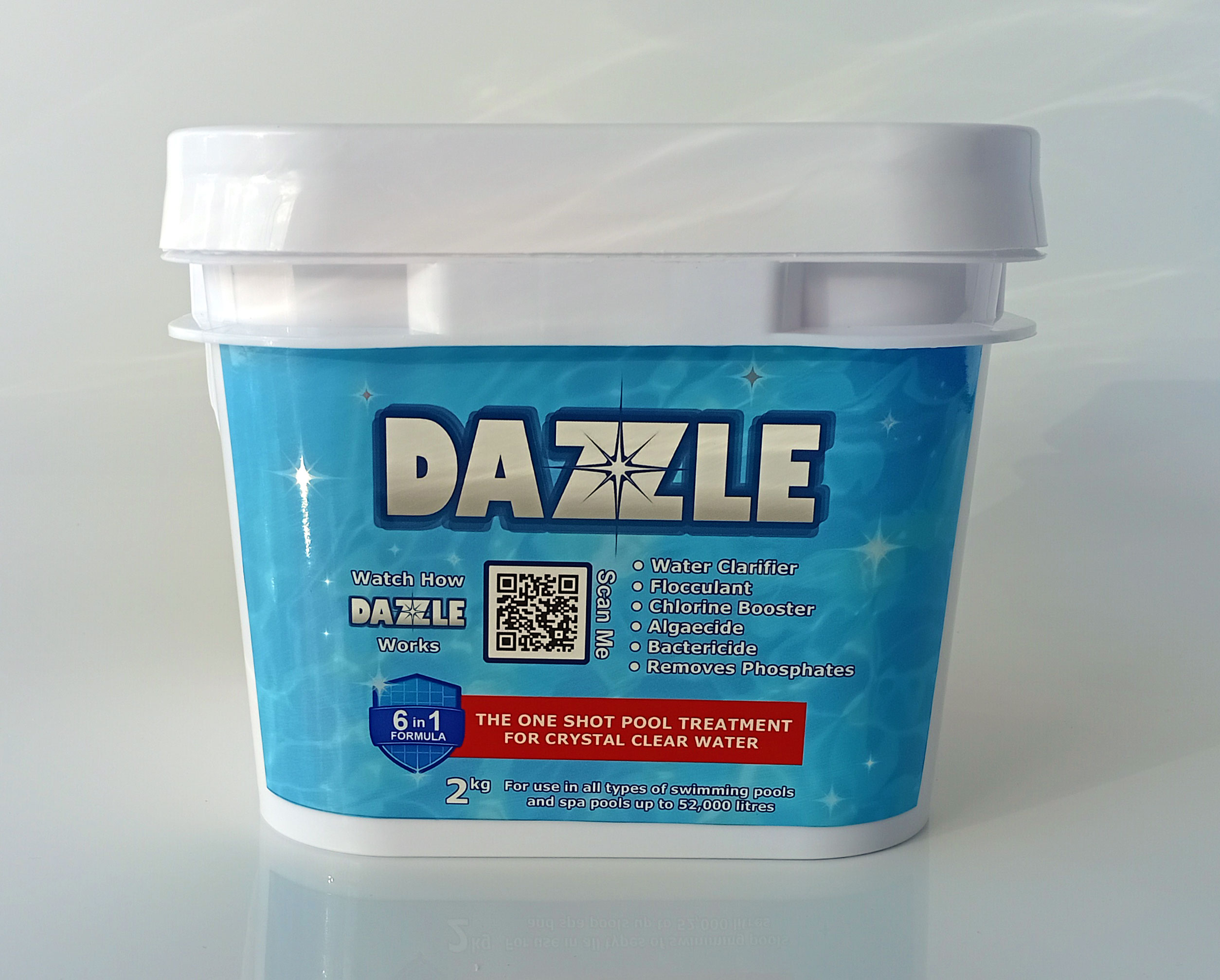
Balanced water helps chlorine, filtration, and Dazzle perform better. This guide explains the main readings in a practical order.
Before you start
Get the pool ready, then follow the steps.
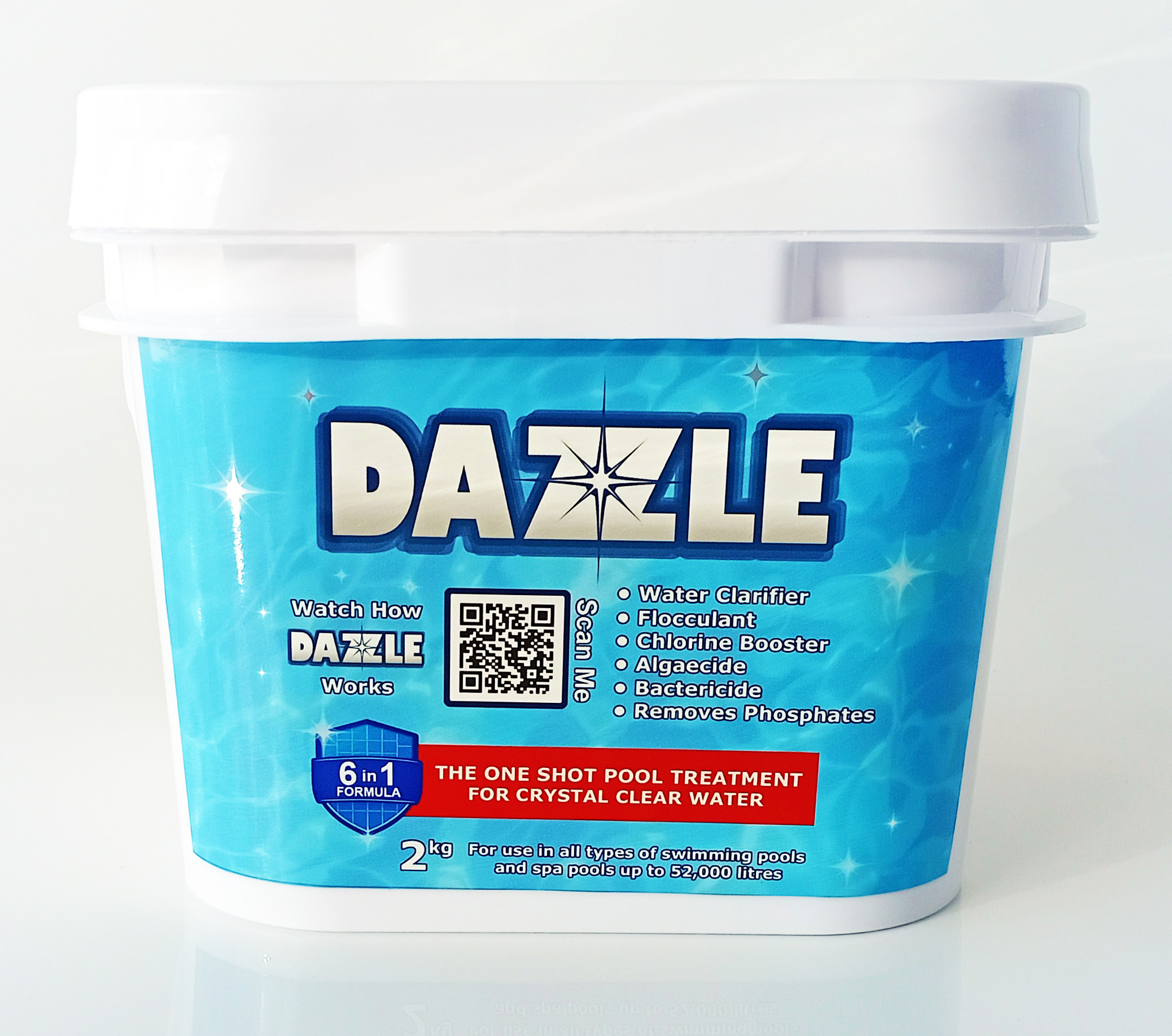
These guides are written for everyday pool owners. Use the steps as a practical starting point, then test your water and adjust based on your own pool size, equipment, and condition.
01
Step 1
Start with accurate test results.
Water balance starts with testing, not guessing. Use a reliable kit or pool shop test and write the results down.
The most useful readings are free chlorine, pH, alkalinity, stabiliser, calcium hardness where relevant, and phosphates for algae-prone pools.
- Test after the water has circulated.
- Use fresh reagents or strips.
- Retest after major corrections.
02
Step 2
Get pH into a useful range.
pH affects swimmer comfort, chlorine performance, and water clarity. If pH is far out, many other treatments feel less effective.
Correct pH gradually and allow circulation before retesting.
- High pH can contribute to cloudiness.
- Low pH can be corrosive and uncomfortable.
- Alkalinity influences pH stability.
03
Step 3
Stabilise alkalinity so pH behaves.
Alkalinity acts like a buffer for pH. If alkalinity is too low, pH can swing. If it is too high, pH can be hard to adjust.
Work carefully because large changes can overshoot.
- Adjust in stages.
- Circulate between corrections.
- Retest before adding more.
04
Step 4
Maintain the sanitiser level.
Chlorine keeps water sanitary and helps prevent algae. After a green pool clean-up, chlorine demand can stay high until the organic load is removed.
Keep testing until the pool holds chlorine reliably.
- Check free chlorine, not just total chlorine.
- Shock may be needed for algae problems.
- CYA affects how much active chlorine is available.
05
Step 5
Balance again after treatment and clean-up.
After using Dazzle, vacuuming, backwashing, topping up, or partially draining, your readings can change. Finish by testing again.
Only swim when the water is clear, sanitised, and balanced.
- Top up water before final testing if needed.
- Clean the filter after heavy debris removal.
- Record results for next time.
Pro tips
Small checks that make a big difference.
Do not chase every reading at once
Make one correction, circulate, then retest before adding more.
CYA changes chlorine behaviour
High stabiliser means chlorine may need more help to stay effective.
Balance after clean-up
Vacuuming, backwashing, and topping up can all change test results.
Ready for the next step?
Dazzle your pool with a clear plan.
Use the guide, dose correctly, keep the water moving, and finish with clean-up, testing, and balance. When you are ready, choose Dazzle and follow the how-to-use guide for best results.