Chemistry tutorial
CYA and chlorine. Know the trap.
If chlorine is showing on a test but algae keeps returning, high CYA may be part of the problem. This guide explains the issue in plain English.
Before you start
Get the pool ready, then follow the steps.
These guides are written for everyday pool owners. Use the steps as a practical starting point, then test your water and adjust based on your own pool size, equipment, and condition.
01
Step 1
Understand what CYA does.
CYA, also called stabiliser or cyanuric acid, helps protect chlorine from sunlight. Some stabiliser is useful in outdoor pools.
Too much CYA can make chlorine less active, so the pool may show chlorine on a test while still struggling with algae.
- CYA protects chlorine from UV.
- High CYA changes how much chlorine is needed.
- It does not disappear quickly on its own.
02
Step 2
Watch for signs of high stabiliser trouble.
High CYA problems often look like chlorine that cannot keep up. The pool may turn dull, grow algae repeatedly, or need constant shock dosing.
If the same algae problem keeps returning, CYA is worth checking.
- Chlorine appears present but algae survives.
- Green or cloudy water returns quickly.
- Shock dosing seems weak or short-lived.
03
Step 3
Test CYA before chasing more chemicals.
Guessing can waste time and product. A proper CYA test helps you decide whether chlorine management is the issue or whether another cause is more likely.
Pool shops can usually test CYA if your home kit does not.
- Record CYA, free chlorine, pH, and alkalinity.
- Check pool volume before any correction.
- Retest after dilution or major water changes.
04
Step 4
Correct high CYA carefully.
If CYA is too high, the usual correction is dilution through partial draining and refilling. The amount depends on the reading and target.
Get professional advice if you are unsure, have a vinyl/fibreglass pool, high water table, or drainage restrictions.
- Do not drain blindly.
- Consider local water restrictions and pool type.
- Retest after refilling.
05
Step 5
Use Dazzle once chlorine can work properly.
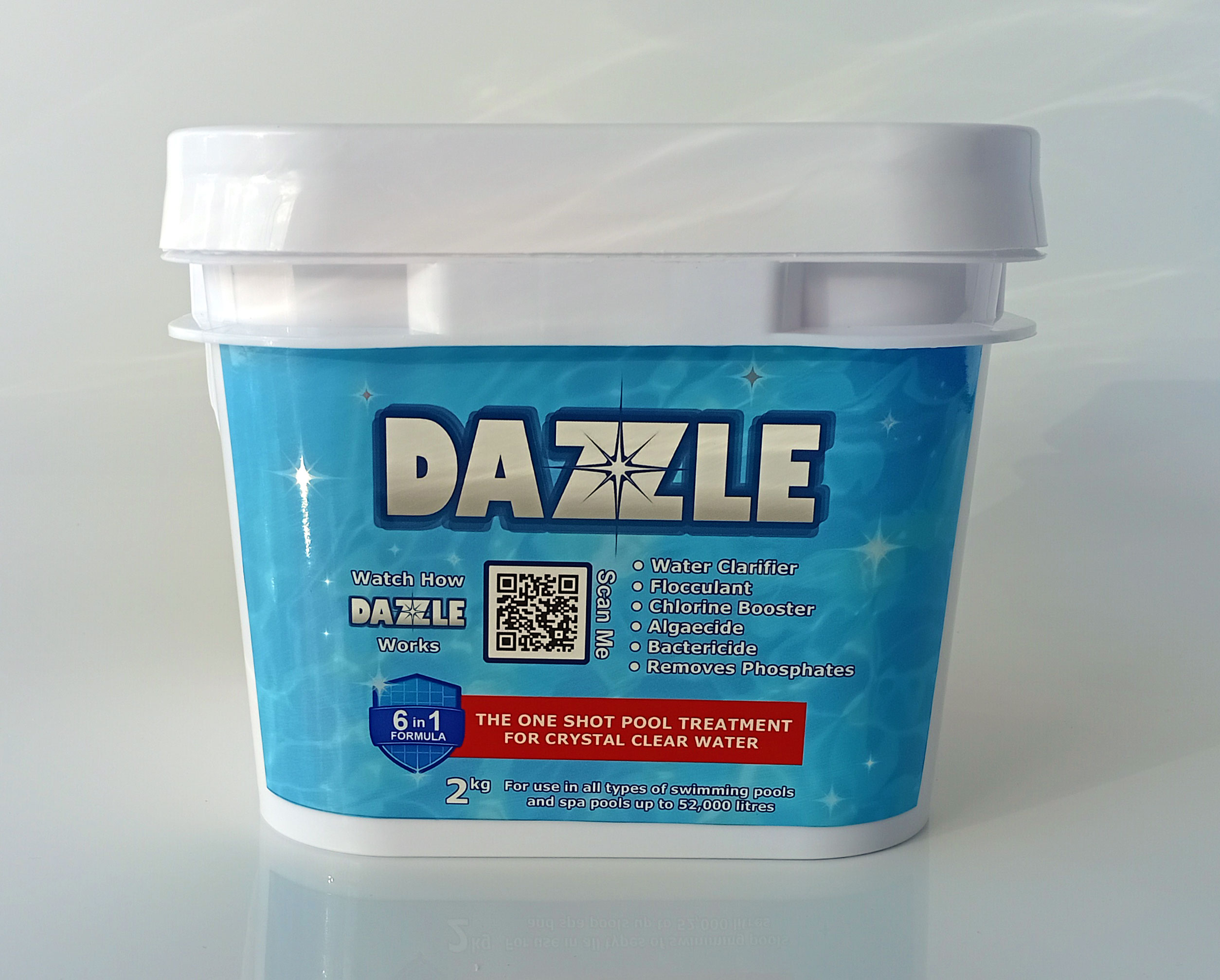
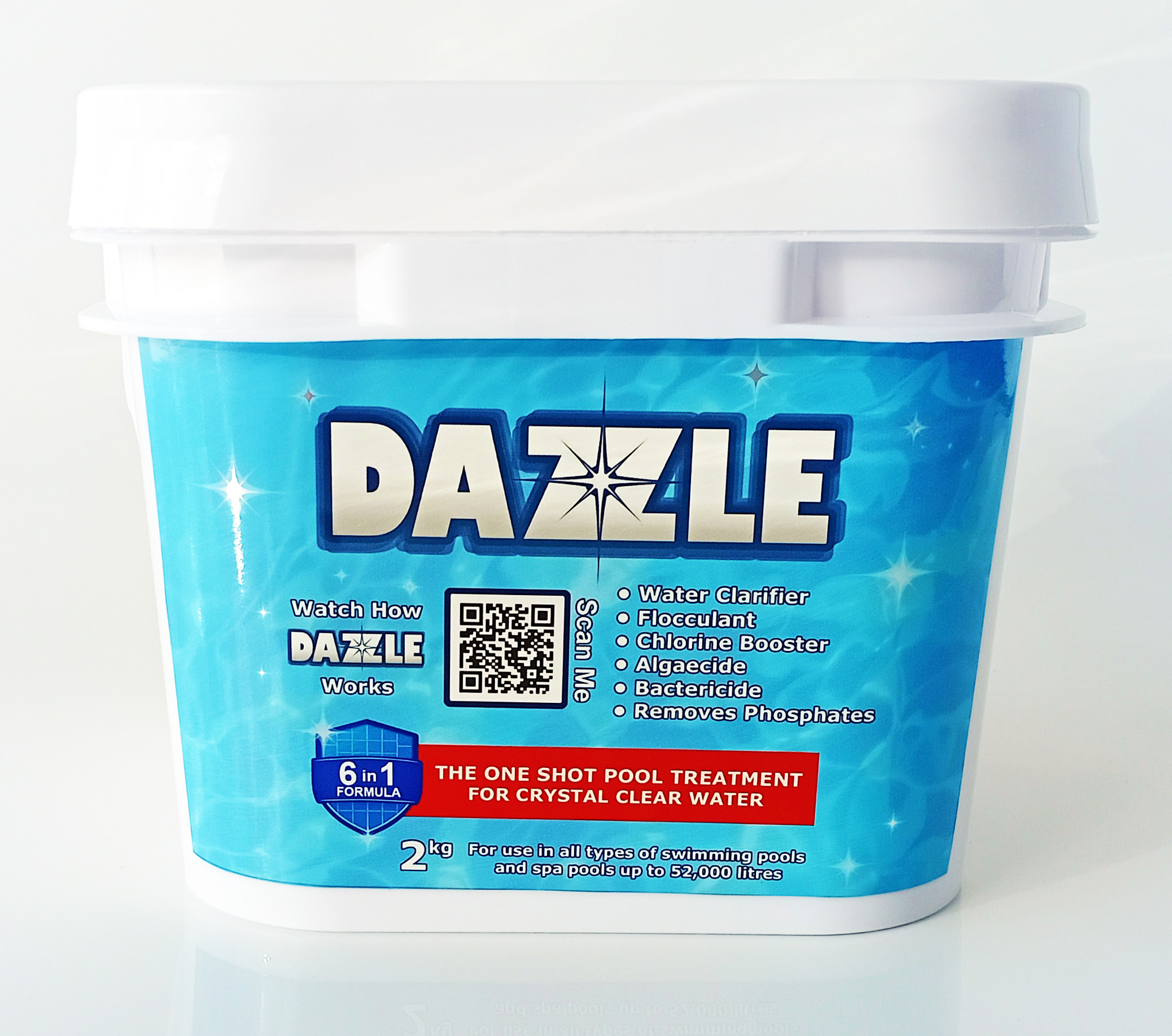
Dazzle can support algae control, phosphate reduction, and clarity, but high CYA can still limit chlorine performance.
Fixing the stabiliser problem first gives Dazzle and chlorine a better chance to produce lasting results.
- Correct CYA if needed.
- Maintain suitable chlorine afterwards.
- Use Dazzle as part of the reset process.
Pro tips
Small checks that make a big difference.
CYA is not bad
The problem is too much CYA, not the existence of stabiliser.
High CYA can cause repeat algae
This is one of the most common hidden reasons pools keep going green.
Dilution needs care
Do not drain a pool without understanding your pool type and local conditions.
Ready for the next step?
Dazzle your pool with a clear plan.
Use the guide, dose correctly, keep the water moving, and finish with clean-up, testing, and balance. When you are ready, choose Dazzle and follow the how-to-use guide for best results.